

One of the area’s most recognizable landmarks, the Governor’s Palace in Colonial Williamsburg is a stately brick structure with gold embellishments and graceful gardens. Inside, the rich furnishings reflect a royal touch.
Originally completed in 1722, the Palace was home to seven British royal governors, Virginia’s first two elected governors (including Thomas Jefferson), and hundreds of servants and enslaved people. After a fire destroyed the Palace in the late 1700s, Virginia’s capital moved from Williamsburg to Richmond. The Governor’s Palace was meticulously reconstructed in the 1930s, and today you can tour its lavish interiors and explore its sprawling gardens.
From uncovering hidden secrets to unlocking deals and travel tips, here are 10 things to see and do when you visit the iconic Governor’s Palace.
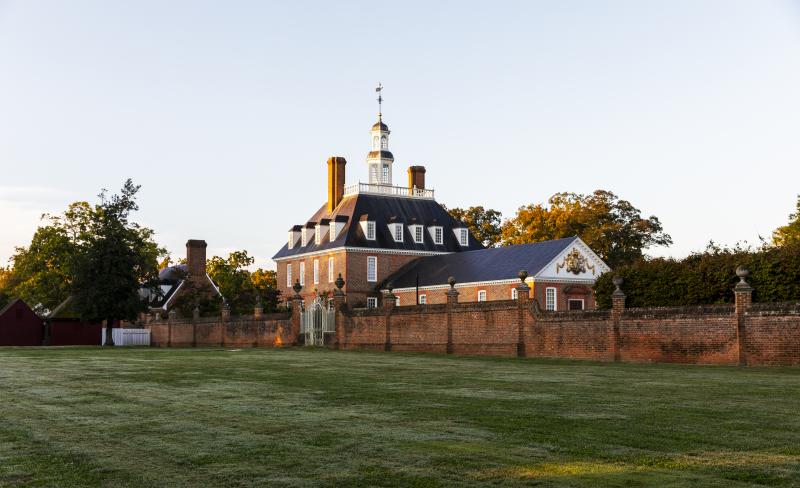
The Governor's Palace at Colonial Williamsburg
1. Explore a Remnant of British Colonial Power
Before the Revolution, the Governor’s Palace stood as the ultimate symbol of British rule in Virginia. It was the official residence of royal governors and lieutenant governors, including Hugh Drysdale and Lord Dunmore, appointed by the British Crown. Every detail of the Palace was designed to assert power, prestige, and permanence, from the elegant Palladian architecture to the formal gardens and opulent décor.
As you approach the Palace, you’ll see that the iron gates are topped with a British crown, and the Royal Coat of Arms is proudly displayed on the building’s façade – a vestige of British power right here in Virginia.
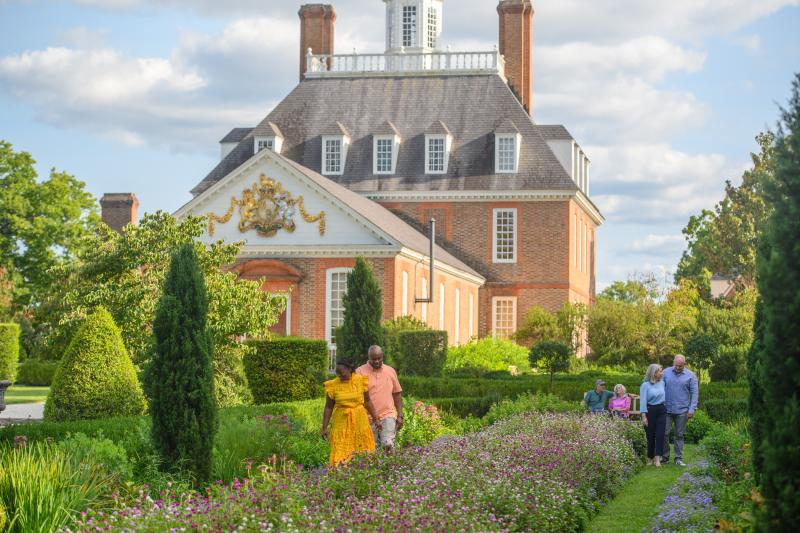
Gardens at the Governor's Palace
2. Wander through the Gardens
History is always in bloom in the Palace gardens. Designed to impress, these lush grounds once showcased the wealth and worldliness of colonial Virginia’s elite. Royal governors used the gardens not only to feed their households, but to reflect their education, taste, and power. The Governor’s Palace gardens were among the most imitated and admired in the American colonies.
Today, the gardens invite you to slow down and get immersed in natural beauty, especially in spring and summer. Stroll through evergreen mazes, manicured hedges, and carefully tended tulip beds. Snap a photo beside blooming borders and imagine the view from the Palace’s grand windows above. Several 18th-century features have been carefully restored, including the sweeping terraces, ornamental canal, and towering ice mount.
3. Unlock the Secrets Behind the Palace Walls
Step inside and discover grand rooms filled with period-accurate furnishings that echo the tastes of colonial Virginia’s highest office. Ornate woodwork, imported textiles, and glittering chandeliers transport you back in time.
View standout pieces in over 60 rooms, including Lord Dunmore’s personal furnishings, which were returned to the Palace after being sold at auction when he fled in 1775. As you stroll through rooms guided by Jefferson’s very own floor plans, you’re not just learning about reconstruction – you’re stepping into a living legacy.
4. Meet the Families Who Once Called It Home
Walking through the grand Palace today, you can learn about the people who lived and visited here. For much of the 1700s, it was Lieutenant Governors like Alexander Spotswood and Francis Fauquier who lived here, serving while appointed governors remained overseas.
As the Revolution neared, the Palace transitioned from royal residence to symbol of independence. Two of Virginia’s first post-colonial governors, Patrick Henry and Thomas Jefferson, moved their families into the home, ushering in a new era.
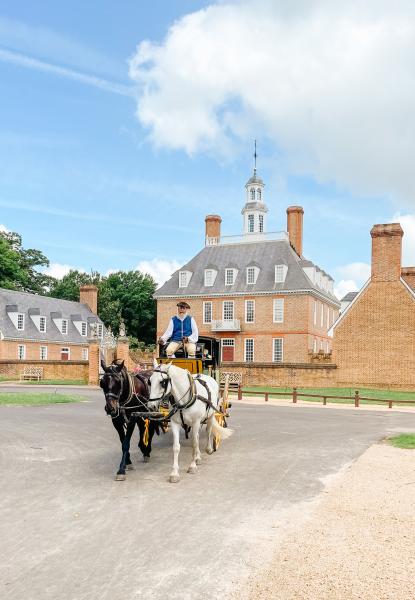
A Carriage Ride in front of the Governor's Palace
5. Get of Glimpse of Life Behind the Scenes
Daily operations at the Governor’s Palace depended on the labor of those working behind the scenes. At any given time, up to 30 people (both enslaved individuals and white servants) lived and worked on the property. Enslaved men and women tended the gardens, cooked meals, cleaned rooms, and maintained the stables and carriages.
Some governors, like Lord Botetourt, arrived from England with a full staff of white servants, while others relied heavily on enslaved Virginians. As you explore the Palace, you’ll uncover the layered realities of colonial life.
6. Follow in the Footsteps of Famous Visitors
In the 18th century, the Palace welcomed some of the most notable figures of the day, from English philosopher George Berkeley to fiery evangelist George Whitefield. Lavish balls celebrating royal birthdays lit up the night with music, feasts, and fireworks. George Washington also walked the Palace halls.
The Palace was also a place where cultures met and power was negotiated. In 1752, Governor Dinwiddie hosted the “Emperor of the Cherokee Nation with his Empress and their Son the Young Prince,” marking a rare moment of Indigenous diplomacy in colonial Virginia.
7. Admire the Stunning Restoration
Though the original Governor’s Palace was destroyed by fire in 1781, its legacy lived on. When Colonial Williamsburg began its restoration in the early 20th century, the Palace was restored with the help of archaeologists, historians, and skilled craftspeople.
During the excavation, archaeologists uncovered a cemetery on the grounds, believed to date back to when the site served as a Revolutionary War hospital. Opened to the public on April 23, 1934, the Governor’s Palace today stands as a stunning tribute to historical preservation.
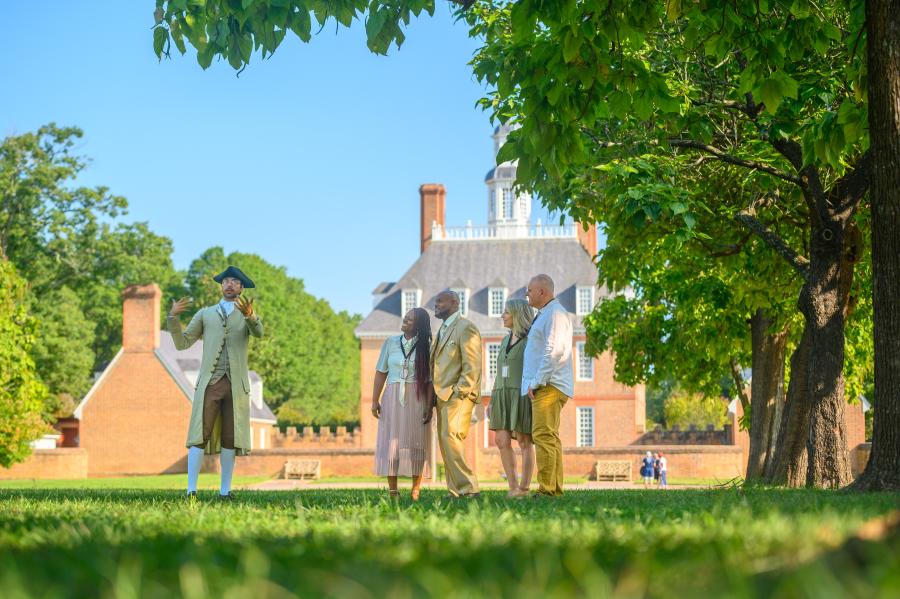
The Governor's Palace at Colonial Williamsburg
8. Take a Tour to Remember
Enjoy a guided tour, offered daily from 10 AM to 4 PM. These expert-led tours bring the Palace to life with stories of its residents and the events that shaped Virginia’s colonial capital. From 4 to 5 PM, you’re welcome to wander the halls and gardens, diving deeper into the spaces that spark your curiosity.
Time your trip with one of Colonial Williamsburg’s seasonal events. From lively reenactments and candlelit evenings to festive celebrations echoing 18th-century traditions, the Palace becomes an immersive journey through history.
9. Know Before You Go: Tickets, Tips & Timing
To explore the Governor’s Palace, you’ll need a valid Colonial Williamsburg admission ticket. Choose from a single-day ticket, an annual pass, or the America’s Historic Triangle Ticket, which includes access to nearby historic sites like Jamestown and Yorktown. Check online for seasonal deals and special offers before your visit.
For the best value, consider a multi-day pass or combo ticket. Arrive early to beat the crowds and give yourself time to enjoy both the guided tour and self-paced exploration.
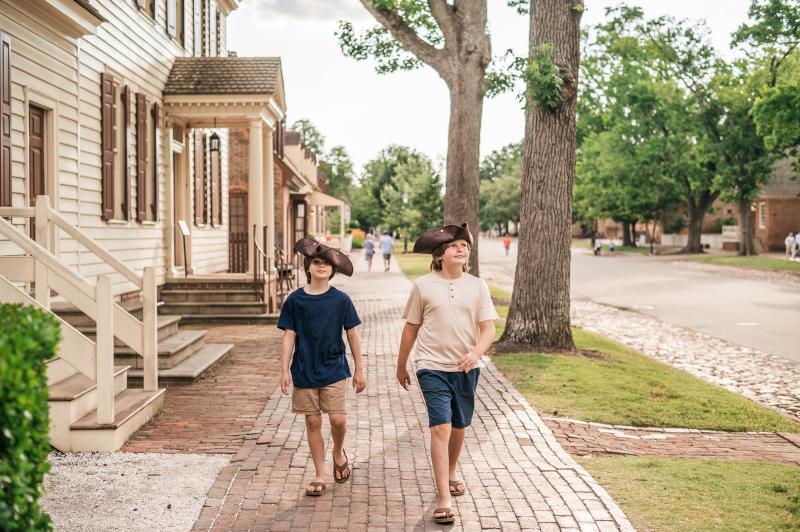
Kids walking down Duke of Gloucester Street
10. Go Beyond the Palace
The Governor’s Palace is in the heart of Colonial Williamsburg. A short walk down Duke of Gloucester Street leads you to other must-see landmarks like the Capitol, Courthouse, Raleigh Tavern, and dozens of working trade shops where you can watch blacksmiths, weavers, carpenters, and other tradespeople in action.