

Before Colonial Williamsburg had historical interpreters and live demonstrations, it had real blacksmiths, woodworkers, printers, apothecaries, dressmakers, and more – ordinary people whose skill kept an entire colony running.
Today, more than 20 historic trades are still practiced daily in the Historic Area, using the same 18th-century tools and techniques their predecessors relied on centuries ago. These aren’t performers reciting lines; they’re master craftspeople who’ve apprenticed for years to earn their place at the forge, the press, or the counter.
Step inside a few of their shops and offices, and you’ll uncover the everyday people who quietly built America, one hammer strike, printed page, and handmade hat at a time.
The Blacksmith
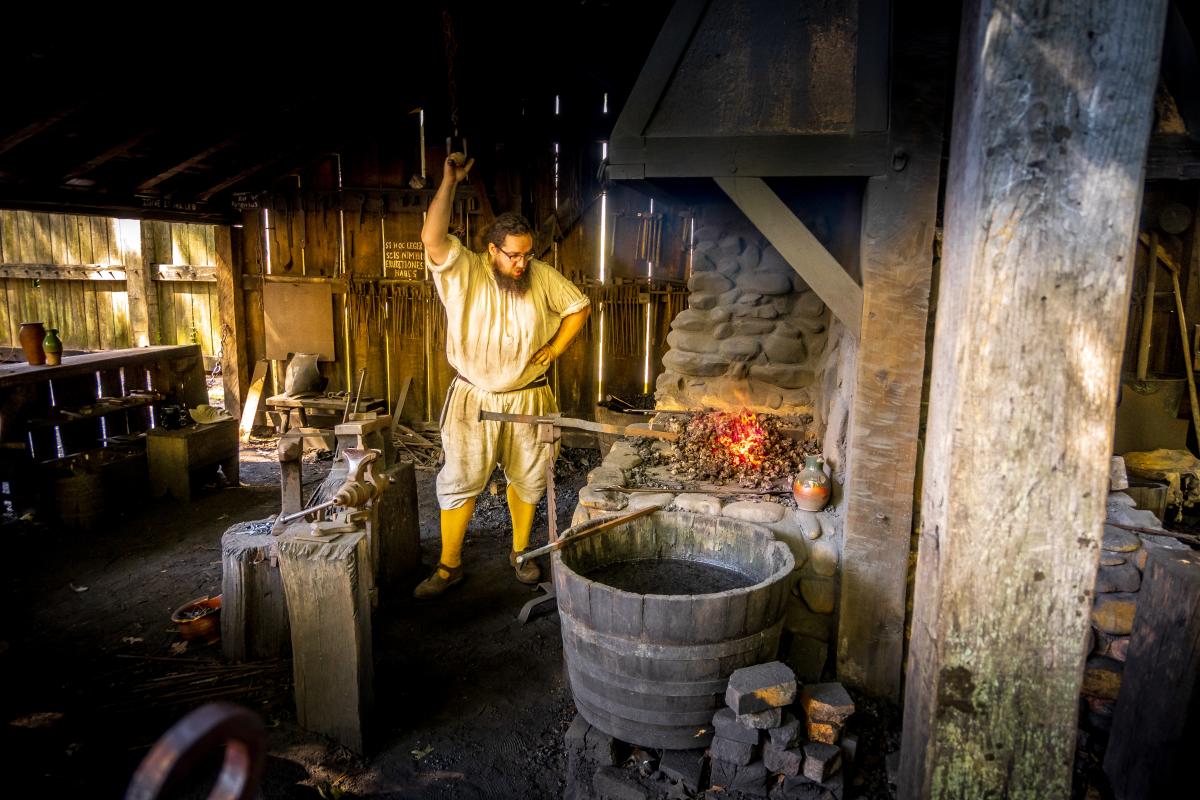 Blacksmith at Jamestown Settlement
Ask most visitors to name a Colonial Williamsburg trade, and this is the one they’ll picture: sparks flying, hammer ringing, iron glowing orange on the anvil. It’s one of the most popular historic trade sites for good reason, but there’s more to the story than the spectacle.
Blacksmiths forged the nails, hinges, tools, and gun barrels that nearly every other trade in town depended on, which made them quietly indispensable to daily colonial life.
The James Anderson Blacksmith Shop became Virginia’s Public Armory during the Revolutionary War, repairing and maintaining arms for the colony’s war effort at a moment when every functioning musket mattered. Mastering the trade took six to eight years of apprenticeship, starting with humble work like forging hooks and nails long before an apprentice ever touched a blade. Watch today’s 🔺 smiths hammer hot iron into functional pieces at the forge, and you’re watching a tradition that armed a revolution.
Related trades to explore: the Gunsmith, Silversmith, Engraver, Founder, and Tin Plate Worker
The Cabinetmaker
Just off Nicholson Street sits the reconstructed shop of Anthony Hay, who set up his cabinetmaking business here in 1756 and quickly began producing fine furniture for Virginia’s gentry and “upper-middling” families.
When Hay’s health declined – likely from years of exposure to fine mahogany dust – he shifted careers to tavern keeping and, in 1767, handed the shop to journeyman Benjamin Bucktrout. Bucktrout added an uncommon specialty to the shop: harpsichord making, which he promoted alongside traditional furniture work.
Visitors today can see cabinetmakers shaping tables, chests, and desks with period hand tools while harpsichord makers craft musical instruments from wood, wire, and quills. Together, the work reveals how a single Williamsburg shop could support two distinct trades.
Related trades to explore: the Harpsichord Maker, Carpenter, Joiner, Cooper, Wheelwright, and Brickmaker
The Printer
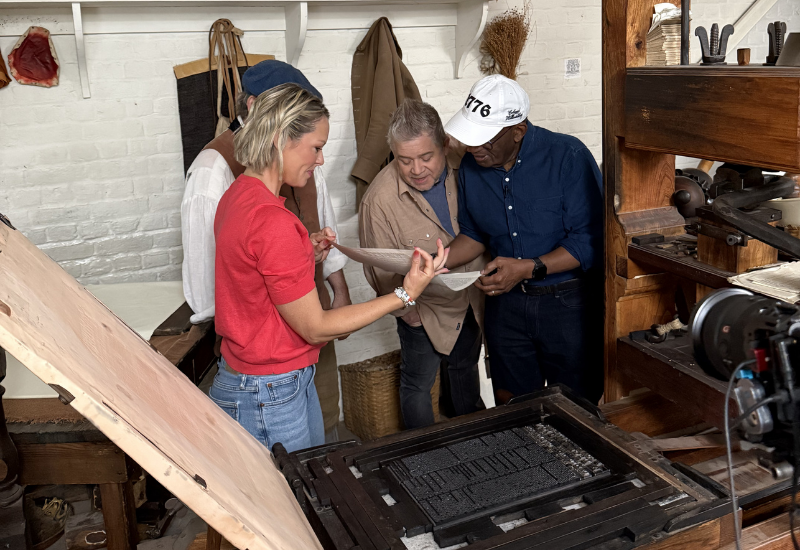
Long before hashtags and headlines, Williamsburg’s printers were America’s original influencers, shaping public opinion one broadside at a time. Several competing newspapers, all confusingly named The Virginia Gazette, ran in Williamsburg simultaneously, spreading news, laws, and eventually revolutionary ideas to every corner of the colony. It was risky work, too: pushing the wrong criticism of the wrong official, and a printer could find themselves charged with seditious libel.
After her husband’s death in 1773, Clementina Rind took over his press without missing a single issue, going on to serve as Virginia’s official government printer at a time when women rarely ran businesses of any kind, let alone ones shaping political discourse.
Watch journeyman set type by hand and run reproduction presses at the 🔺 Printing Office to see how it all came together.
Related trades to explore: the Bookbinder
The Apothecary
Williamsburg was too small to support separate doctors and surgeons, so the apothecary filled all three roles: diagnosing illness, compounding medicine, and performing surgery. By 18th-century standards, even pulling a tooth counted as a surgery. Earning that responsibility took roughly five years of apprenticeship, blending hands-on craft with scientific study of chemistry, botany, and anatomy.
At the Pasteur & Galt Apothecary Shop on Duke of Gloucester Street, you can see the original 18th-century drug jars, surgical tools, and compounding equipment that made this three-in-one profession possible – and imagine just how much trust a colonial patient had to place in one person’s steady hands.
Related trades to explore: the Gardener, Farmer, and Cook
The Milliner
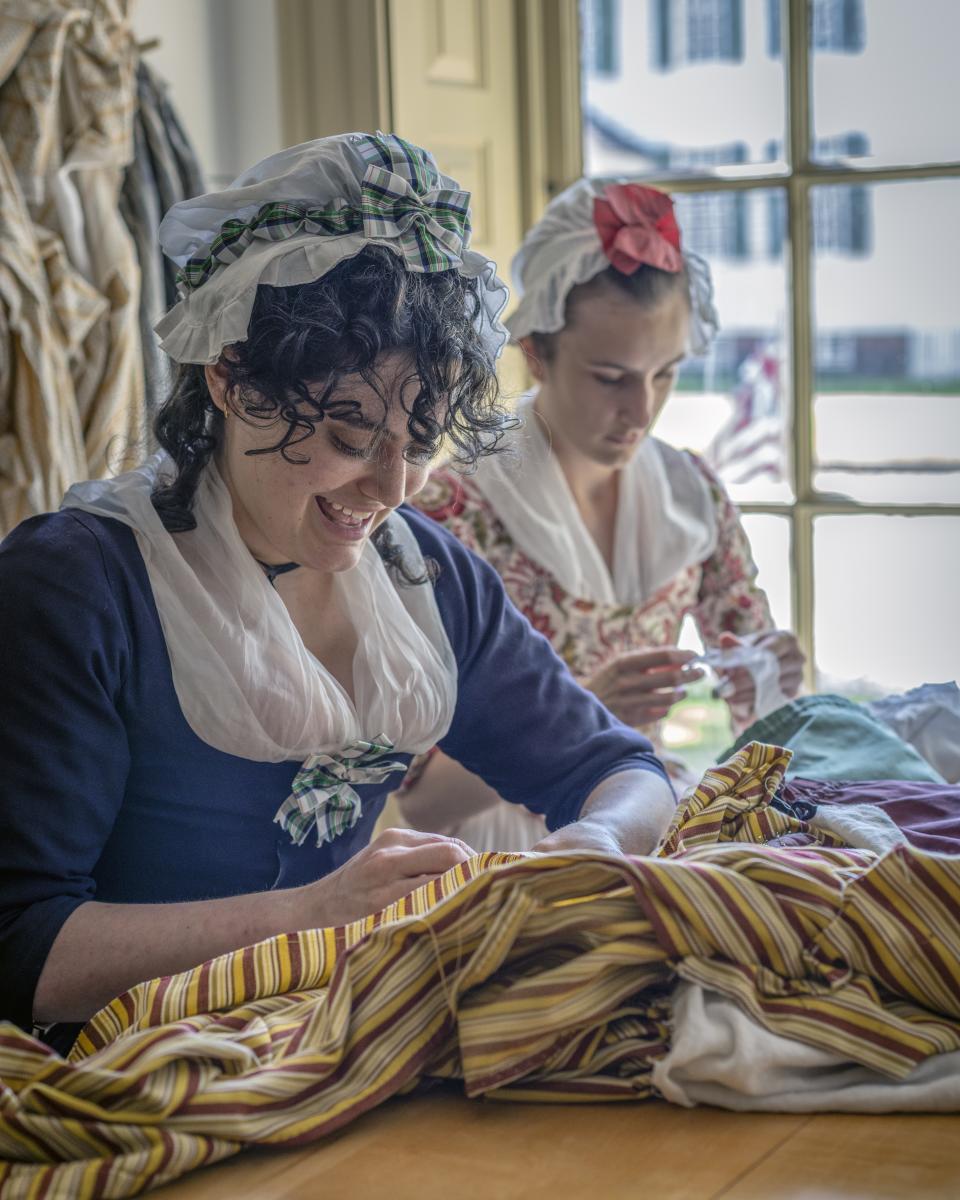
Milliners made wardrobe accessories (think cloaks, mitts, aprons, and hats) while mantua-makers crafted dresses and women’s clothing. Williamsburg had six millinery shops in the 18th century, and all six were owned and run by women. Margaret Hunter ran one of the best-known, selling hats, gloves, dresses, and accessories from a shop she owned – an uncommon position of independence for a woman of her era.
That success didn’t rest on one person’s hands alone. Enslaved women’s skilled labor, including specialized starching and finishing work essential to period fashion, helped keep shops like Hunter’s running smoothly behind the scenes. Today, you can watch milliners and mantua-makers create period accessories and consult on 18th-century fashion, continuing a trade built almost entirely by women.
Related trades to explore: the Leather Breeches Maker, Shoemaker, Tailor, Weaver, and Wigmaker
Explore More of Colonial Williamsburg
The shops along Duke of Gloucester Street represent a legacy of time-honored trades and fine craftsmanship, and we’ve only scratched the surface here. For the full roster, browse this list of historic trades to map out which shops you’ll step inside first.
Ready to explore Colonial Williamsburg beyond the trade shops? Check out 10 things to see at the Governor’s Palace for another angle on colonial life, browse where to eat in Colonial Williamsburg to fuel your day of exploration, or start with a guide to Colonial Williamsburg if you’re still mapping out your trip. Whatever draws you in first, the Historic Area rewards the kind of traveler who likes to look a little closer.